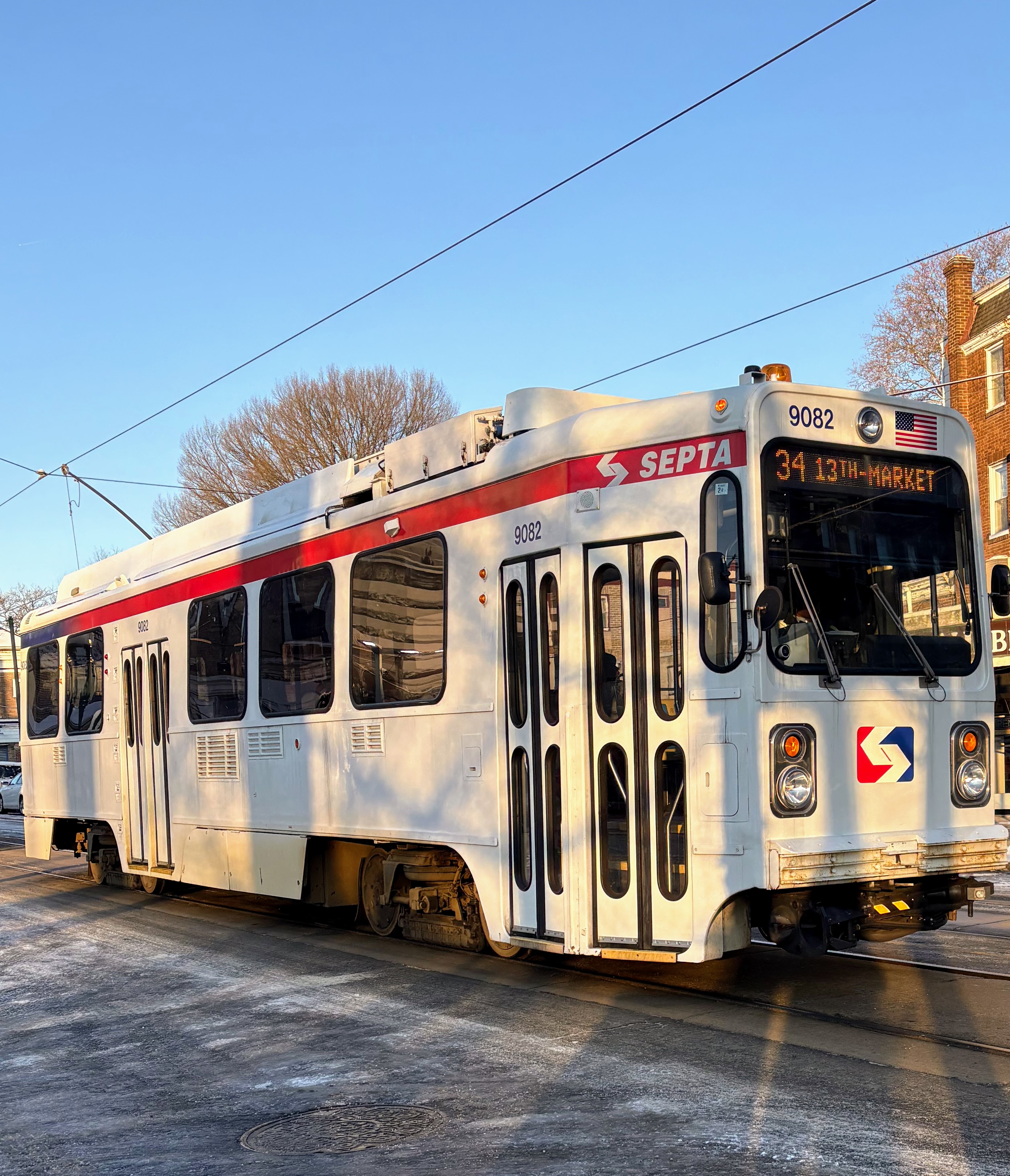
The T1 trolley line connects West Philadelphia and Center City. SEPTA’s modernization efforts of this line will improve accessibility, safety, and other issues the line currently faces. Currently, “the trolley shares a lane with cars and makes stops in the middle of the street to pick up riders”, SEPTA notes. The modernization efforts, which are in their “Alternatives Development and Evaluation” planning phase, are set to begin design in 2036. Set to finish in 2041, the efforts will make the T1 more accessible, fast, easy, safe, reliable, and beneficial to the communities that ride it.
The T1 line’s 63rd-Malvern station, located in the Overbrook neighborhood of West Philadelphia, is the trolley’s western terminus loop. It is the trolley stop most near Saint Joseph University’s campus, offering students a public transportation option in addition to the Paoli/Thordale’s commuter train at Overbrook Station.
Sophia Bertsch is a senior at Saint Joseph's University
Saint Joseph’s students share their ideas on the modernization impacts.
Students shared the potential impacts the project may have on current students. Participant 1 explained that the modernization of the T1 “would make me more inclined to go on the trolley.” She believes that SEPTA, especially the T1, is under utilized by Saint Joe’s students, partially
because they have yet to learn about it. Along with its modernization will hopefully be marketing the trolley towards Saint Joe’s students. “A lot of people don’t even know that this is an option”, she explains, and marketing is a potential turning point in student ridership on the T1. She believes students will benefit from the UPass program, which can market SEPTA’s various forms of transportation to students.
Participant 2 discussed the UPass program as an ally for Saint Joseph’s students to learn more about SEPTA. He had multiple ideas to market the program through university clubs, the student body, social media, and local leaders. He also recommended methods to market the T1 route, such as tabling events on campus and talking to faculty and other individuals on campus who regularly use SEPTA to commute to work. He views the T1’s modernization as necessary given market changes in the future. Individuals expect transportation to improve over time, he explains. He hopes that SEPTA can become more like the DC Metro, which he described as consistent and clearly communicating wait times to riders. Overall, participant 2 was optimistic about T1’s modernization and marketing can spread word-of-mouth communication regarding its improvements.
Participant 3 has taken the T1 multiple times and recognizes its convenience and importance to West Philadelphia’s communities. Transportation facilitates community, she believes, and the modernization movement has the potential to involve Saint Joseph’s students in Philly, incorporating them into a larger city. The route is especially relevant, as many students who go into the city are going to Center City. She believes the T1 direct route being to a desirable location, along with the efforts that will make it easier and more broadly, teach the advantages SEPTA has to offer.


